Home › Common Problems › Granule Loss and Shingle Deterioration
Granule Loss and Shingle Deterioration
in Raleigh, NC
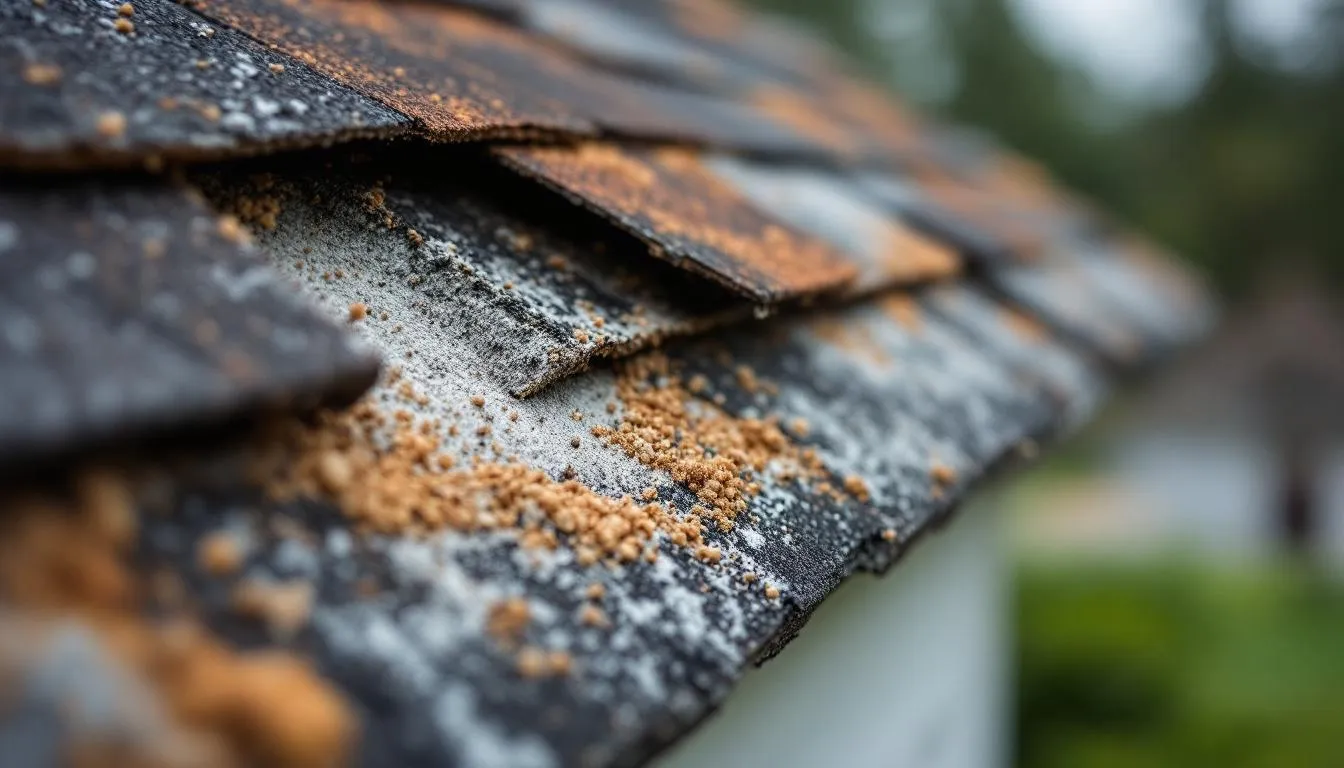
Raleigh summers push attic temperatures above 150°F and UV exposure is intense from April through October. Winter freeze-thaw cycles then hit shingle material that is already baked from the summer. Most three-tab roofs put on during the 1990s construction boom are now at or past the end of their useful life. Granule loss is the first visible sign the UV-protective layer is failing. Once enough granules wash away, the asphalt underneath cracks and curls and active leaks follow.
Raleigh Roof Repair Pros helps Raleigh, NC homeowners fix granule loss and shingle deterioration — call for a free inspection.
Quick Answer
Raleigh's intense summer heat and UV wear away the grainy coating on shingles, and once that layer is gone, water gets through fast. Most 1990s roofs in the Triangle are already at the end of their life. A roofer inspects the shingles and tells you if a repair or full replacement makes more sense. Call (984) 500-1173 if you see granules washing out of your downspouts.
Telltale Signs
Warning Signs to Watch For
- Heavy granule deposits collecting in gutters or downspout splash areas after rain
- Shingles appearing lighter in color or showing a bare, rough asphalt texture
- Curling at shingle edges or corners, particularly on south and west facing slopes
- Cracking or brittle shingle tabs that crumble when touched during inspection
- Bald spots on shingles where granules are entirely absent
- Accelerated algae or moss growth on shingle surfaces where granule coating has worn
Root Causes
What Causes Granule Loss and Shingle Deterioration?
UV and Heat Aging
South and west facing roof slopes in Raleigh take direct solar radiation all through the long growing season. Shingle surface temperatures on those slopes routinely hit 170°F on a clear July afternoon. That repeated extreme heat breaks down the asphalt binder. The binder is the sticky layer that holds the granules onto the shingle. Once it weakens, summer thunderstorms wash the granules off in big waves.
The Fix
Full Roof Replacement with Cool-Roof Shingles
Old shingles are pulled off and the deck is checked for heat damage. New architectural shingles with a reflective coating go on, dropping surface temperature by as much as 20 to 30°F.
Manufacturing Defect in Older Shingles
Some shingle brands made in the mid-1990s and early 2000s were installed all across the Triangle. These shingles had a design flaw. The granules — the gritty surface layer that protects the shingle — were not embedded deep enough and fell off years too early. Homeowners in Wakefield, Traditions, and Stonehenge who have never had a roof check may still have these bad shingles over their heads.
The Fix
Defective Shingle Removal and Full Replacement
All bad shingles come off and the deck gets checked for moisture damage. New shingles from a current product line with tested granule retention ratings are installed.
Algae and Moss Biological Growth
Raleigh's warm, wet climate is perfect for algae and moss to grow on shaded north-facing roof slopes. Moss grows rhizoids, which are tiny root-like threads that push under the shingle surface. They lift granules off and hold moisture against the shingle, which shortens its life fast.
The Fix
Biocide Treatment and Zinc Strip Installation
The growth is killed with a low-pressure biocide wash approved for Wake County stormwater-sensitive areas. Then zinc or copper ridge strips are installed. Each rainfall washes metal ions down the slope and stops new growth from coming back.
Self-Diagnosis
Which Cause Applies to You?
Check the signs you're observing to narrow down the likely root cause before your inspection.
| What You're Seeing | UV and Heat Aging | Manufacturing Defect in Older Shingles | Algae and Moss Biological Growth |
|---|---|---|---|
| Granule loss concentrated on south and west slopes, north slope intact | |||
| Uniform granule loss across all roof slopes regardless of sun exposure | |||
| Black streaks or green moss visible on north-facing slopes with granule lifting | |||
| Shingles brittle and crumbling at corners on a roof under 15 years old | |||
| Heavy granule flush in gutters after the first summer rain following winter | |||
| Granule loss worst directly below tree canopy on otherwise sound shingles |
Free Quote
Get a free quote in Raleigh
No obligation — tell us what's going on and we'll text you back shortly.
Other Problems
Services That Fix This
Granule Loss and Shingle Deterioration Near You
Also Helpful