Home › Common Problems › Moss and Algae Roof Growth
Moss and Algae Roof Growth
in Raleigh, NC
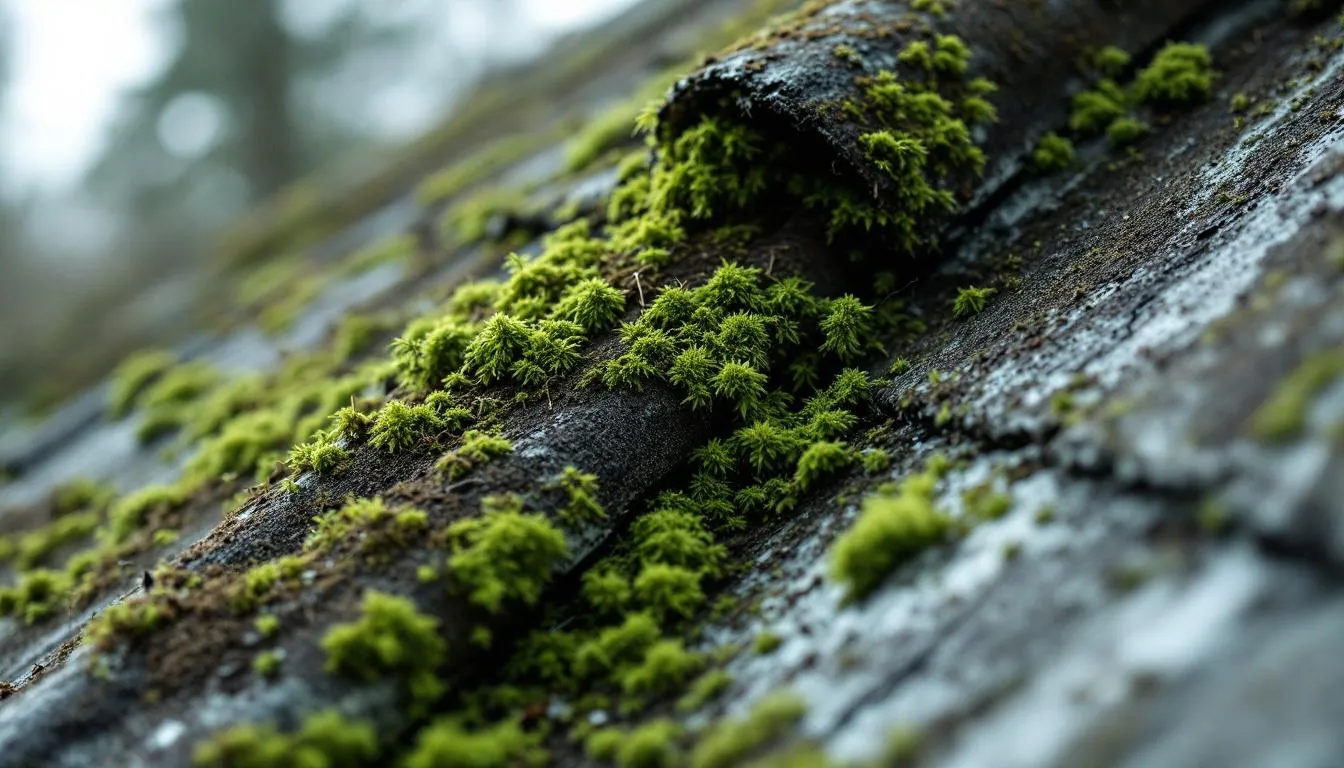
Raleigh's warm temperatures and high annual rainfall create near-perfect conditions for moss and algae on asphalt shingle roofs. The loblolly pines and willow oaks shading Triangle neighborhoods make north-facing slopes even more vulnerable. Dark streaks are Gloeocapsa magma algae. The thick green cushions are true moss, and both actively damage shingles. Early on this seems minor, but once moss root systems dig in, the damage picks up speed fast.
Raleigh Roof Repair Pros helps Raleigh, NC homeowners fix moss and algae roof growth — call for a free inspection.
Quick Answer
Raleigh's heat and heavy rainfall help moss and algae grow fast on shingles, especially under the shade of pine and oak trees. Moss roots dig into shingles and lift them up so water gets underneath. A roofer safely cleans the roof and can add treatments that slow regrowth. Call (984) 500-1173 if you see dark streaks or green patches starting to spread.
Telltale Signs
Warning Signs to Watch For
- Black or gray vertical streaks running down the shingle field from ridge to eave
- Green or brownish-green cushion-like growth visible on shingles, thickest on north slopes
- Shingle granules loosening along the edges and margins of moss colonies
- Moss growth visible in valleys and along roof penetrations where debris accumulates
- Roof surface retaining visible moisture and appearing darker than surrounding areas after rain dries
- Lichen crusty growth visible as white, gray, or orange patches on older shingles
Root Causes
What Causes Moss and Algae Roof Growth?
Algae Spore Colonization
Gloeocapsa magma algae spores float through the air all across the North Carolina Piedmont and land on every roof in the region. On Raleigh rooftops shaded by tree canopy or facing north, the surface stays wet long enough for spores to grow. The algae feed on the limestone filler in standard asphalt shingles and leave black streaks running down the slope.
The Fix
Low-Pressure Biocide Wash and Preventive Strip Installation
A no-pressure chemical treatment is applied using a solution safe for Wake County's stormwater-sensitive drainage areas. This kills the algae without stripping granules. Then zinc or copper ridge strips are installed to keep algae from coming back with each rainfall.
Moss Colony Establishment
True moss needs a surface that stays damp, and north-facing Raleigh slopes under mature pines stay wet long enough after rain for moss to take hold. This is common in neighborhoods like Wakefield, Heritage, and North Raleigh. Moss grows rhizoids, which are root-like threads that push under shingle tabs and beneath the granule layer. They lift shingles and open water pathways every time they expand and contract.
The Fix
Manual Moss Removal and Chemical Treatment
Established moss is carefully hand-brushed off to protect the granules, then a penetrating biocide is applied to kill the remaining rhizoid tissue. Any shingles that were physically lifted or cracked by the moss get replaced before a preventive treatment plan is set up.
Lichen Adhesion Damage
Lichen is a combined algae-and-fungus organism that takes hold on roofs typically 10 or more years old in Raleigh's humid climate. It is much harder to get rid of than algae or moss on its own. Lichen grips the shingle with a holdfast, which is a root-like anchor that pulls granules and asphalt material off when the organism is removed. That leaves bare patches that UV radiation then destroys.
The Fix
Chemical Lichen Treatment and Shingle Assessment
Lichen is treated with a dwell-time biocide that kills it in place. Over several rainfalls it detaches on its own, so no scraping is needed and granules stay intact. After it clears, the shingles are assessed to see how much damage occurred and whether partial or full replacement is needed.
Self-Diagnosis
Which Cause Applies to You?
Check the signs you're observing to narrow down the likely root cause before your inspection.
| What You're Seeing | Algae Spore Colonization | Moss Colony Establishment | Lichen Adhesion Damage |
|---|---|---|---|
| Black vertical streaks running uniformly down slope without raised shingle edges | |||
| Raised shingle tabs visible at edges of a green cushion-like growth area | |||
| Crusty, flaky patches of white or orange growth firmly adhered to shingle surface | |||
| Growth concentrated only on north-facing slope and valley areas | |||
| Dark streaking on all slopes including south-facing with no physical shingle damage | |||
| Bare granule patches left behind after scraping at crusty growth spots |
Free Quote
Get a free quote in Raleigh
No obligation — tell us what's going on and we'll text you back shortly.
Other Problems
Services That Fix This
Moss and Algae Roof Growth Near You
Also Helpful